
April 25, 2025
Meeting Recap
Location: Project BEST
Topic: Skills Gap Discussion
Topics
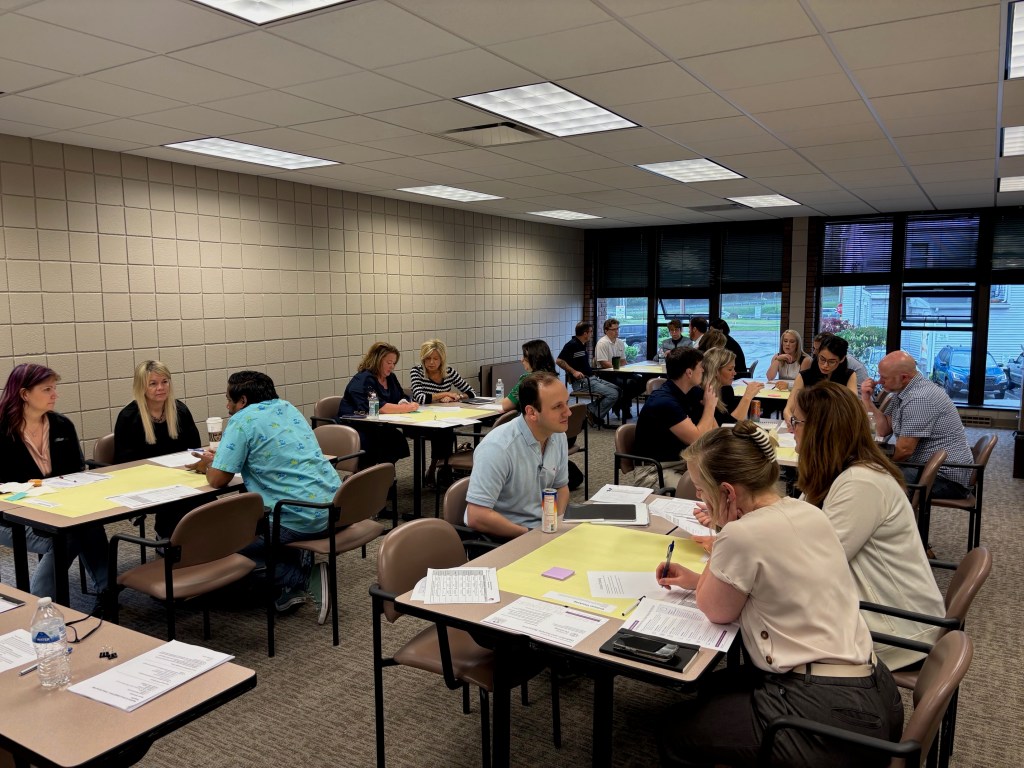
RISE participants discussed the skills gap recent high school and college graduates, focusing on six key areas. Notes from the World Cafe-style discussion are included below.
Technical Skills
Typing
Microsoft Office
Adobe Creative Suite
Information overload means there are many applications to learn
Basic computer skills
Certifications and assessments are available
“How might we integrate certifications into curricular requirements for K-16 students to develop these skills?”
Critical Thinking
Confidence/Independence/Trust instilled
Creativity recognized in grading
Teach students to have a solution before asking a question
Internships can be a way to develop critical thinking.
Project-based learning
Setting priorities
More capstone projects
Budgeting
Today’s students are resourceful
Participation
Theory to application
“How might we get students to start critical thinking earlier through internships, simulated workplace experiences?”
Interpersonal Skills
Communication: Professionalism and polished, better prepared, don’t overshare, have boundaries, don’t have devices out during interviews, ask questions when uncertain, smaller groups have more interaction and confidence, emotional intelligence
Team work: Workshops and networking, mock interviews, interview practice rounds with local employers
Simulated workplace interviews
Interpersonal interactions: Communication and eye contact, confidence
Prove skills: Eye contact, communication, employers/educators should mirror the behaviors we wish to see.
“How might we train leaders to deal with these topics? Mirror the behavior. Teach by example. Once a month supervisor training on a different topic. Available training provided – required.”
Communication
Need to expand on interview questions vs. yes/no answers, relaxed environment, appropriate education models?
Active listening: Ability to ask for clarification, eye contact, what are they saying (oversharing about night before, drama with friends and family, swear words and cursing.
Need to communicate face to face, phone vs. email/text
Honest communication, supervisor needs to be able to have difficult conversations, lack of confidence impedes clarification of roles/tasks, tone-understanding how communications are received
Timid to express ideas, texting affecting communication, spelling, grammar, inability to distinguish between forms of writing
Where does understanding of professional communication come? One classes teaching professional communication vs. speaking, persuasion vs. explaining, business communication.
How are we implementing solutions, how is feedback being utilized, accountability, internal vs external communication, knowing how gatekeep information, understanding that they represent the company at all times.
“How might we: Recognize behaviors like eye contact and professional dress, differentiate different types of communication (email/text/Teams chat), business readiness course.”
Technology
Tools: Videoconferencing, Microsoft suite, job specific tools
Edu: Hands-on activities, microcredentials, internships, networking events, mentoring
Schools do not have basic computer classes
Educators: HR onboarding solution, system of acceptable standards of conduct for AI and technology, ChatGPT in submitting assignments, not using technology, behind the trends, Legitimacy on writing skills and ability growth, using assessments to determine competency, LinkedIn and embedded skills training, what AI processes are being used to assess resumes and cover letters?
Talk to text and paste
Switching/learning new platforms
Technology is a tool, accept that tech is a part of our everyday lives
What good is technology if we aren’t using it properly, we only use what we need
Tech is interfering with jobs that don’t require it Communication. Too reliant on tech, Understand basic math (calculators), setting phone down during work
Students aren’t digging deep. They are using tech to get job done fast not right.
Simple skills are needed: Math, measuring tape, counting cash, typing
Teams vs. Zoom
“How might we have more in-depth, hands-on technology courses/degrees available for high school and college students. Get into open education resources.”
Imposter Syndrome
Employers: Encourage critical thinking to help improve confidence, normalize failure and focus on corrections and how things can be fixed
Employees: Ask questions, get clarification before starting a task if needed
Employers: Employees may be reluctant to communicate out of fear, Challenges and failures that indicate failure is o.k.
Educators: Projects for upperclass students and freshmen to talk about learning, failing, and growing
Research employer before starting, LinkedIn can be used, Google the company to learn about them
Employers and Educators: Make a platform to make mistakes and learn
Employers: Create an environment that mistakes are looked as bad but as a learning opportunity.
“How might we: Workplace simulations, theory and application, more intensive onboarding, better alignment with employers and middle schools.”
Resources
- NACE Competencies
- The Gap in Perceptions of New Grads’ Competency Proficiency and Resources to Shrink It
Key Outcomes
Topics raised for future discussion:
- Identifying ways of involving students in RISE discussions
- Topic for May 23, 2025 meeting: How to help students navigate the job search
Sign Up for the RISE Mailing List
If you are not receiving RISE emails, sign up for our Constant Contact mailing list.
 RISE
RISE 